2027 Catalyzing Agroforestry Grant Program - Applications open August 2026
Catalyzing the next phase of agroforestry in the United States

Search Results
Search this site
70 results found with an empty search
- Agroforestry Coalition Policy Roadmap Release
Kitt Healy • Wednesday August 12 2026 08:03:00 PM UTC The Agroforestry Coalition is pleased to announce the release of Rooted & Rising: A Federal Policy Roadmap for Agroforestry. This report outlines the Coalition's high level priorities for policy advocacy through 2029, drawing on in-depth research, interviews with Coalition members and policy experts, and Policy Working Group discussions. Rooted & Rising frames agroforestry as resilience infrastructure and outlines the necessary investments in financial, physical, and social systems to enable a durable transition to trees on farms on purpose. Drawing on existing Coalition policy proposals developed between 2022 and 2026, the roadmap goes beyond the farm bill to highlight innovative proposals ranging from ready-to-implement administrative actions through longer-term legislative proposals that could move through various vehicles, including budget reconciliation, and appropriations. To learn more about the policy priorities please join us for the Policy Working Group Quarterly call on September 24 at 2 PM ET/ 11 AM PT. To receive zoom information for this meeting, please email aaron@agroforestrycoalition.org. Many thanks to Cristel Zoebisch, lead author of Rooted & Rising, and the many contributors and reviewers who made this report possible. Special thanks to Volgenau Climate Initiative for their support. Take care, Kitt
- Unlock Funding Opportunities with Contour Lines Corp Agroforestry Tree Planting Grant 2026-2027
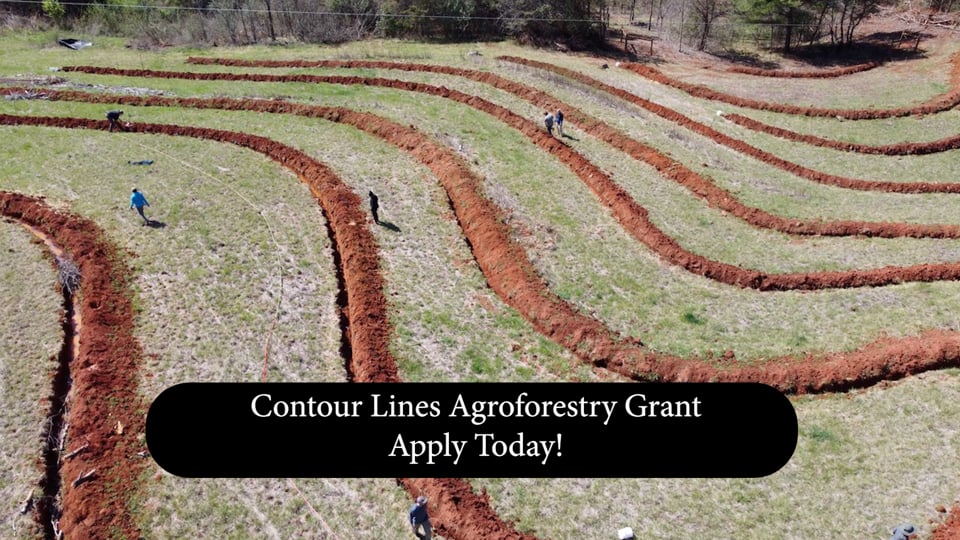
Grow Your Impact: Contour Lines Corp Agroforestry Grants Now Open! Exciting news for growers, land stewards, and community leaders! Contour Lines Corp is now accepting grant applications for the Agroforestry Tree Planting Grant for the upcoming 2026–2027 planting season. Whether you're looking to integrate trees into existing agricultural land, restore local ecosystems, or enhance community food forests, this grant is designed to help bring your agroforestry vision to life. How You Can Apply Learn More: Visit www.contourlines.org/USA Check out the video below to see our mission in action! https://www.youtube.com/watch?v=6Z8czg1Wlxw&list=LL
- Funding Opportunity: Contour Lines USA Agroforestry Grants
Are you working to transform land into a productive, regenerative ecosystem? Contour Lines Corp. is currently accepting applications for its Tree Planting Working Grants, targeted at individuals, farms, educational centers, and community groups across the United States and its territories. Since expanding its operations to the U.S. in 2018, Contour Lines has planted over 130,000 trees using contour-based planting, alley cropping, and syntropic agroforestry techniques. This grant opportunity provides hands-on resources to scale regenerative land management nationwide. What the Grant Covers Selected projects receive direct operational support, including: Custom Site Design: Technical layout planning tailored to your landscape’s topography and water movement. Planting Materials: Quality trees, shrubs, and cover crop seeds focused on food production and soil restoration. Hands-on Execution: On-site assistance with trenching, berm construction, and tree establishment. Mentorship: Ongoing technical guidance to ensure system longevity and productivity. Who Should Apply? The grant is open to: Private landowners and smallholder farmers transitioning to agroforestry. Nonprofits, educational institutions, and community initiatives. Regenerative projects aiming to reduce erosion, build topsoil, and diversify yield. How to Get Started Review the full criteria and details directly on the Contour Lines USA Application Page. Submit your site details and project objectives through their online application form.
- Host the 2027 North American Agroforestry Conference
The Association for Temperate Agroforestry (AFTA) continues to accept host organization/institution proposals for the 2027 North American Agroforestry Conference (NAAC). The host application deadline is extended to August 31, 2026. Seed money and planning support from AFTA are included. Please reach out with your interest or any questions! northamericanagroforestry@gmail.com https://www.agroforestryassociation.org/
- 2026 Gather to Grow Conference Update: Early Bird Extension & Call for Sponsors and Exhibitors
Mark your calendars! The 2026 Gather to Grow Forest Farming Conference is heading to Blacksburg, VA, from October 23–25, 2026, at The Inn at Virginia Tech and Skelton Conference Center. Hosted by the Appalachian Forest Farmer Coalition (AFFC), this event gathers forest farmers, landowners, researchers, and technical assistance providers from across Appalachia and beyond. Key Highlights & Updates: Extended Early Bird Rates: You now have until August 7th to lock in discounted registration rates. Sponsors & Exhibitors Needed: AFFC is looking for general, featured, and scholarship sponsors, as well as exhibitors. Scholarship funding is particularly critical this year to help keep the conference accessible to as many growers and practitioners as possible. What to Expect: The three-day event will feature pre-conference activities, expert keynote speakers, interactive panels, and hands-on workshops focused on non-timber forest products (NTFPs)—including medicinal herbs, maple syrup, woodland foods, and specialty forest crafts. Head over to the 2026 Gather to Grow Conference Page to secure your registration before August 7th or to apply as a sponsor/exhibitor.
- New Podcast Episode: Organic Agroforestry Management Farm Tour – Spring Green, Wisconsin
This episode of the Perennial AF podcast features a farm tour in Spring Green, Wisconsin, where experts discuss the real-world challenges and strategy of converting conventional fields into organic agroforestry systems. “It Has Its Own Challenges” – Organic Agroforestry Management Farm Tour How do you successfully manage agroforestry alley cropping and silvopasture systems organically in the Upper Midwest? In this episode, Erik Hagan and Dave Hopey take listeners on a walk through the Savanna Institute's demonstration farm in Spring Green, Wisconsin. They share their firsthand experiences converting conventional corn and alfalfa fields into organically certifiable acres of berry and nut crops, livestock pasture, and native prairie. Tune in to learn about: The Transition: Moving from conventional rows to diversified organic systems. Management Realities: Key lessons on crop selection, setup, and irrigation. Organic Solutions: Honest strategies for tackling weed and pest control without synthetic inputs.
- Agroforestry Accelerator Program: Applications Now Open!
The Food Finance Institute’s free 6-month Agroforestry Accelerator Program helps US-based farm and non-farm entrepreneurs scale value-added perennial businesses through expert financial coaching, peer cohorts, and investor pitch preparation. Accelerate Your Agroforestry Business: From Seed to Shelf The Agroforestry Accelerator Program—presented by the Food Finance Institute (FFI) in partnership with the Savanna Institute and the Agroforestry Coalition—is a free, 6-month cohort designed to build profitable agroforestry brands and processing enterprises across the United States. Open to both farm and non-farm entrepreneurs, this intensive program helps participants bridge the gap between ecological perennial production and financial viability. What the Program Offers: Comprehensive Training: Deep dives into foundational agribusiness finance, operational development, supply chain optimization, and retail strategy (sales, e-commerce, and branding). 1-on-1 & Peer Support: Regular expert coaching sessions combined with biweekly cohort meetings to refine business models alongside fellow perennial entrepreneurs. Investor Readiness: Technical guidance on financial planning, accounting, and raising equity, culminating in a live investor pitch presentation. Who Should Apply? The Agroforestry Accelerator Program is intended for entrepreneurs and businesses that are: Producing agroforestry crops or ingredients Developing value-added agroforestry products Processing agroforestry products Building consumer brands that utilize agroforestry ingredients Expanding nursery businesses that provide planting stock for agroforestry systems Working to strengthen agroforestry supply chains and market opportunities Whether you are just beginning to commercialize a product or are looking to scale an established business, the Accelerator provides practical tools, expert guidance, and a network of peers committed to business growth.
- Announcing the Nature Conservancy's Expanding Agroforestry Program!
Greetings, ARKx Network! We are thrilled to share some fantastic news for producers looking to diversify their land and boost regional climate resilience: The Nature Conservancy’s Expanding Agroforestry Program grant application is now officially open! If you have been waiting for the right moment to integrate trees into your active production landscape, this is your green light. The Expanding Agroforestry Project can help you bridge the gap between vision and implementation, offering targeted financial support and expert technical assistance to farmers across 30 states. Supported Practices The program is specifically focused on helping producers design, plant, and manage three foundational agroforestry practices: Silvopasture: Integrating trees, forage, and livestock into a single, mutually beneficial system. Alley Cropping: Planting wide rows of high-value trees or shrubs alongside companion crops in the alleys. Windbreaks: Establishing linear plantings of trees or shrubs to protect crops, shield livestock, and conserve soil moisture. Take Action Ready to build a more resilient, diversified farming system? Don't miss out on this funding cycle:👉 Visit the Expanding Agroforestry Program Website to explore the 30 eligible states, join the email updates list, and start your application today!
- Rooted In & Branching Out: Gather to Grow 2026
Cultivating forest farming across Appalachia and beyond. The Appalachian Forest Farmer Coalition (AFFC) and our ARKx Network partners can’t wait to gather our vibrant community in the heart of the Blue Ridge Mountains. Together, we will cultivate and grow knowledge, foster deep community roots, and celebrate the diverse history, yields and opportunities from our native forests. Where the understory meets industry, this multi-day event is a cornerstone for anyone dedicated to forest-based agroforestry in temperate regions. Whether your focus is forest botanicals, mushrooms, and other non-timber forest products, or integrating with other practices, this is a great space to learn, network, and build partnerships on many scales. From hands-on pre-conference workshops and a buzzing Forest Farming Expo to expert presentations and inspiring keynote speakers, now is the time to help shape the agenda, not to mention lock in some early bird savings. Gathering at a Glance Who: The AFFC, ARKx Network partners, forest farmers, stewards, practitioners, and you. What: 2026 Gather to Grow Forest Farming Conference Where: The Inn at Virginia Tech and Skelton Conference Center | Blacksburg, VA When: October 23–25, 2026 Web: appalachianforestfarmers.org/gather-to-grow Secure Your Spot: Early Bird Rates Are Live! Ready to grow with us? Take advantage of our early bird pricing and save before rates go up. Early Bird Registration: $249 (Available through July 15, 2026) Standard Registration: $299 (Student and youth discounts are available!) 4 Ways to Jump In & Shape the Conference We welcome voices from every region and experience level, to have a seat at the table. Here is how you can participate: 1. Share Your Voice: Speaker & Topics Nominations and Open Calls Have a story, a study, or a successful practice to share? We are looking for engaging sessions, interactive panels, and roundtables. Key Topics: Traditional ecological knowledge, planting stock supply, industry partnerships, business planning, marketing/sales, processing, and policy. Perks: Selected speakers receive one complimentary conference registration ($299 value). Deadline: Speaker proposals are accepted through June 22, 2026. 2. Conference Accessibility: Scholarships Available Forest farming is for everyone, and financial constraints shouldn’t stand in the way of learning or stewardship. Thanks to the generosity of sponsors like Rural Action and the Barnes-Berry Family Trust, we are proud to offer scholarship opportunities to help cover attendance costs. Beginners, future forest farmers, and historically underserved landowners are highly encouraged to apply! Deadline: Speaker proposals are accepted through June 22, 2026. 3. Showcase Your Work: Expo Exhibitors The Gather to Grow Expo is branching out! It’s the perfect place to put your tools, plants, products, or organization in front of an estimated 300+ attendees. The Setup: Spaces include a 6-foot rectangular table. Setup begins Friday evening, with breakdown by Sunday noon. Cost: Exhibitor fees are $200 (and are automatically included in many of our sponsorship packages). 4. Invest in Community: Conference Sponsorship Sponsoring the conference positions your organization as a pillar of agroforestry and local forest economies. All sponsors receive prominent digital and in-person recognition throughout the event promotions. Flexible Options: Standard packages are available, as well as an absentee sponsorship option if you want to send tabling materials but can't make the trek to Virginia. Physical items for attendee bags or the raffle are also welcomed and appreciated! View Sponshorship Package Ready to grow with us? Early bird registration is officially open for $249 through July 15, 2026 (Standard adult registration is $299; student and youth discounts are available). Whether you come to teach, exhibit your work, learn or just have some forest farming fun, you are welcome at the heartwood of this community. We can't wait to see old friends and new faces from across the ARKx network in Blacksburg this October. Let’s branch out together!
- Earth Day Greetings from the ARKx Network
Today is more than a celebration of our planet; it is a call to rethink our collective responsibility and relationship with the ground beneath our feet. At the Agroforestry Regional Knowledge Exchange (ARKx) Network, we are rooting for a future where working trees, regenerative agriculture, and conservation weave together to transform our landscapes—from the back forty to the deep forests and beyond. While agroforestry is often discussed in modern terms, its heartbeat has echoed since time immemorial, through these places and the peoples that still tend them. For millennia, Indigenous communities have practiced highly sophisticated stewardship, cooperative management, and reciprocal harvests. These systems were never just about food and forage; they were built on a generational relationship based upon mutual care: If you care for the land, the land will care for you. This reaches beyond "sustainability"; in both philosophy and practice. From those ancestors to this very day, this ancestral relationship is still as regenerative as it is restorative to all. Today, modern agroforestry studies and scales both new and ancestral principles to meet challenges of changing communities and climate. By integrating working trees, native and perennial species into our crop, livestock and forest systems, we bridge the gap between tradition and science. This 'regenerative recipe' creates a multitude of benefits for all, transcending past traditions and present challenges, towards a brighter future. Especially when that special ingredient happens to be reciprocity, and maybe a few ramps. Quite literally, no part of these highly relational practices or natural processes can happen in a vacuum, without relying on someone or something else. Not just on Earth Day but everyday, it feels like a kind and important reminder that both indigenous and modern agroforestry flourishes as much in community as it does within an ecosystem. As Robin Wall Kimmerer writes in The Serviceberry: An Economy of Abundance: "Through reciprocity, the gift is replenished. All flourishing is mutual." This Earth Day, we invite you to dive in --or deepen your reciprocal relationship to these, our invaluable natural resources and relations, through agroforestry or otherwise! Support Local: Seek out local farmers, nurseries and co ops and agroforestry producers in your area. Support silvopasture, tree crops and more. Learn about and enjoy local non-timber forest products like maple syrup, forest grown mushrooms and sustainably harvested forest botanicals (like ramps, elderberries, goldenseal and black cohosh) just for a start. Learn the Land: Identify your watershed and use a map to follow your river to the sea. Think about the impact of your actions and habitat -- good and bad, as if they effect everything downstream. HINT: it's because they do :) Mid-spring is the very best time for forest site assessments! Take a walk with a field guide book or go on guided plant walk to learn local native species. Find (or add) agroforestry farm tours, demonstrations and virtual opportunities on the ARKx Community Agroforestry Calendar. Get curious. Ask family, neighbors and elders about their favorite seasonal food, farm or forest traditions. Research the Indigenous history of the land you inhabit. Get Involved: There are so many local, regional and national groups are dedicated to the work of growing agroforestry, regenerative agriculture, other important work like natural resources management. Find farms and organizations near you on the ARKx National Agroforestry Map, or create your own profile. Let’s grow a future that is diverse, resilient, and rooted in reciprocity. In the meantime, great growing! The ARKx Network Team